
Holiday Lighting Safety: Avoid Common Electrical Hazards
There’s something about the first night you turn on the holiday lights that makes the season feel official. Before you wrap the porch railing, light up the tree, or pull out the inflatable snowman, take a few minutes to check what you’re plugging in and where it’s getting power.
A frayed cord, an indoor timer used outside, or too many strands plugged together can create a shock or fire hazard. A few simple checks before you decorate can help keep your holiday display running safely all season.
Inspect Your Holiday Lights Before You Hang Them
Start by checking last year’s lights while they’re still unplugged. It’s much easier to spot a cracked socket at the kitchen table than after you’ve clipped the entire strand to the roofline.
Look for these signs of damage on light strands, extension cords, and plug-in decorations:
- Frayed insulation or exposed wires
- Cracked or broken bulb sockets
- Damaged plugs or loose connections
- Cords that were crushed or pinched in storage
Replace damaged strands and cords before decorating. If you’re shopping for replacements, look for a recognized safety testing mark such as UL or ETL and check the packaging to see whether the product is rated for indoor or outdoor use.
Use Outdoor-Rated Lights, Cords, and Timers
A sunny afternoon can turn into a snowy evening here in Colorado. If you’re decorating outside, make sure the lights, extension cords, and timers are all rated for outdoor use. Plan your cord route around places where snow and water tend to collect, such as the bottom of porch steps or the area beneath a downspout.
Plug outdoor decorations into an outlet with ground-fault circuit interrupter (GFCI) protection. A GFCI cuts power when it detects a ground fault, helping protect against electric shock. If it keeps tripping, stop using the setup and have the issue checked. Let your electrician know if it happens when you plug in a particular decoration or only after rain or snow. That detail can help narrow down the cause.
Follow the Limits for Connecting Light Strands
Before connecting light strands end to end, read the manufacturer’s instructions. Each product has a limit, so check it again when adding new lights to an existing display. For traditional incandescent holiday lights, connect no more than three strands together and follow any lower limit on the label.
If you’re replacing older lights, LEDs use less electricity and run cooler than incandescent bulbs. Check the connection limit on LED strands, too. It varies by product.
Remember to account for everything plugged into the same setup, including lighted wreaths, inflatables, and yard displays. Choose an extension cord rated for the combined load. If the cord falls short, use one properly rated cord of the right length and avoid connecting multiple extension cords together.
Hang Lights Without Pinching or Puncturing Cords
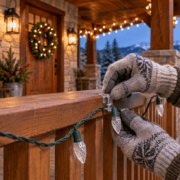
Use light clips designed for the surface you’re decorating. Nails and staples can damage the insulation around the wires. Give cords some slack at corners and attachment points, especially where wind could pull on an outdoor strand.
Think through how you’ll get power to the display before you hang the lights. A cord run through a window can get pinched when the window closes, and a cord tucked under a rug can overheat. Route cords away from doorways and walkways where guests could trip over them. If your setup depends on running a cord across the front steps every year, a conveniently placed outdoor outlet may be worth considering.
When decorating near overhead power lines, keep yourself, your ladder, and your equipment at least 10 feet away. Choose another spot for the lights if you can’t maintain that clearance.
Turn Off Holiday Lights Before Bed or Leaving Home
Switch off your indoor and outdoor holiday lights before heading to bed or leaving the house. A properly rated timer makes it easier to stick to a regular shutoff time. If you leave before the timer is set to turn the display off, switch it off on your way out.
If you have a live Christmas tree, check its water level daily and keep the tree at least three feet from fireplaces, space heaters, and other heat sources. Turning off the lights and checking the tree can be part of the same evening routine as locking the front door.
Get Your Home Holiday-Ready With High West Electric
If a breaker trips every time the lights come on, or you’re unsure whether your outdoor outlets have GFCI protection, High West Electric can help. We can troubleshoot recurring trips, check your existing outlets, and install an outdoor outlet where it makes sense for your home.
High West Electric is based in Denver, CO, and serves the entire metro area. Our customer service-based approach ensures that each client enjoys the process from installation to the end product – no matter the size of the job. Our goal is to be YOUR electrician and offer an experience that goes Beyond the Wires. Visit our website to learn more
